


.jpg)
Ghent engineers at Polysense want to use cameras and artificial intelligence to cut food waste. They shifted their focus from autonomous race cars to potatoes, croissants, and cookies. “The problem is gigantic. So is our impact."
By Dieter De Cleene, De Morgen — 27 July 2026
“In a fry factory, easily 40 tons of potatoes roll along the conveyor belt every hour,” says CEO Yarne De Munck, as a far more modest portion rattles past on a demo setup at Polysense’s Ghent headquarters. “We can keep an eye on every single one of them, around the clock.”
By combining camera footage with artificial intelligence, the young company makes it possible to quickly adjust processes in the food industry. This helps combat food waste, partly by preventing the production of items that don’t meet quality standards.
“It took me a while to realize how serious the situation is,” says co-founder and CTO Lucas Van Dijck. “The first time I saw fully loaded trucks driving off to waste processing, I thought something had gone badly wrong. After the umpteenth truck, it dawned on me: this is simply the norm. The problem is gigantic. And so is our impact.”
Potatoes lost to the peeler
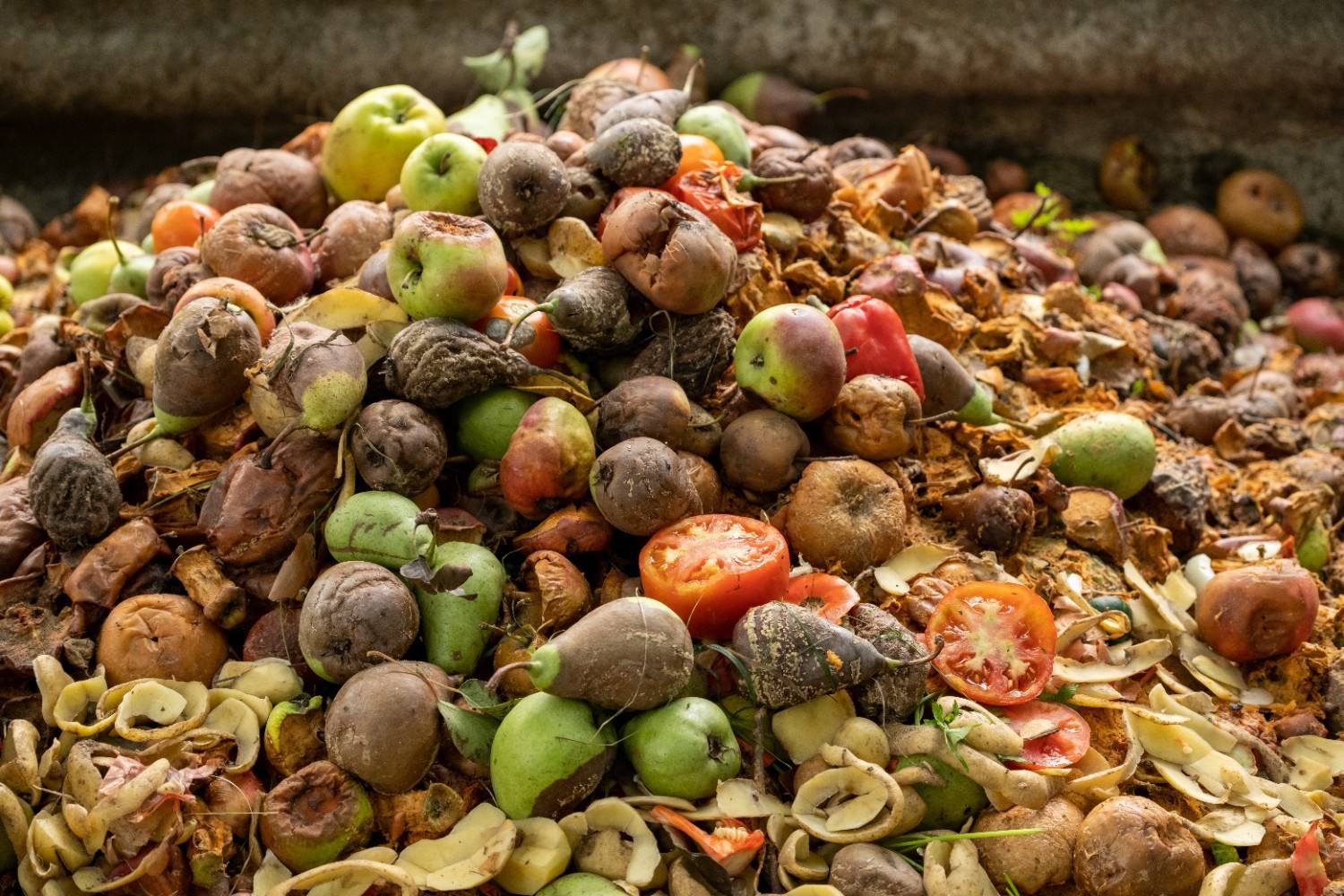
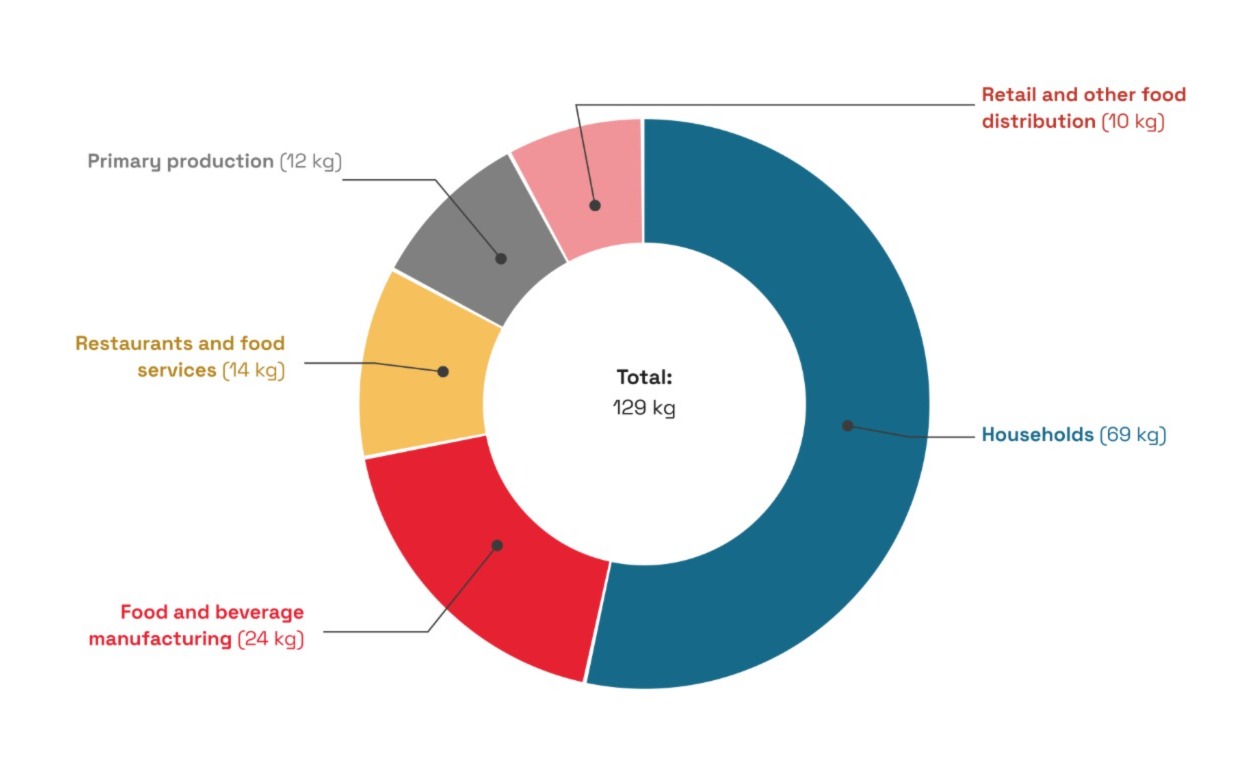
Worldwide, roughly a third of all the food we produce is lost somewhere between field and fork. In Europe, about 130 kilograms of food per person are lost every year. We waste more than half of that ourselves (69 kilograms). The processing industry comes in second, accounting for roughly a fifth of the total (24 kilograms per person).
According to the United Nations, that food loss is responsible for as much as 8 to 10 percent of global greenhouse gas emissions. Producing food has a major impact on climate and the environment. “For food we don’t end up eating, that impact is for nothing,” says food-loss expert Lisa Van den Bossche of ILVO (the Flanders Research Institute for Agriculture, Fisheries and Food). “On top of that, processing that waste has an additional environmental impact. So food loss creates a problem twice over, and industry plays a significant part in that.”
According to De Munck, the core of the problem is that the raw materials food companies work with vary enormously, and production lines aren’t able to adapt to that variation — yet the end product still has to meet the same standards every time.
Take the potatoes passing under a camera here. The problems already start with peeling. “A peeling machine is set to run for a certain number of seconds, based on the size of the potatoes,” De Munck explains. “If your potatoes are bigger, bits of peel get left behind, which you don’t want. If they’re smaller, you sometimes peel away the whole potato.”
A similar problem occurs when cutting potatoes into fries or chips. Depending on their size, potatoes are routed to different cutting machines. If they end up in the wrong one, the fries or chips turn out too small, and are therefore worthless.
“Companies typically try to avoid that by checking a sample every hour,” De Munck notes. “Which is madness, really. It’s not representative, and everything produced in the meantime that doesn’t meet spec has to be thrown out. With our system, you can continuously make adjustments before you ever have to throw anything away.”
Special effects
At Polysense’s facility, you’ll find bags of chips, bread rolls, and cookies lying around — not because a party could break out at any moment, but as a sample of their clients’ product ranges. Cameras monitor the clients’ production lines, and artificial intelligence then analyzes the footage. If something goes wrong, the computer sends a signal to adjust the process, or the adjustment happens automatically.
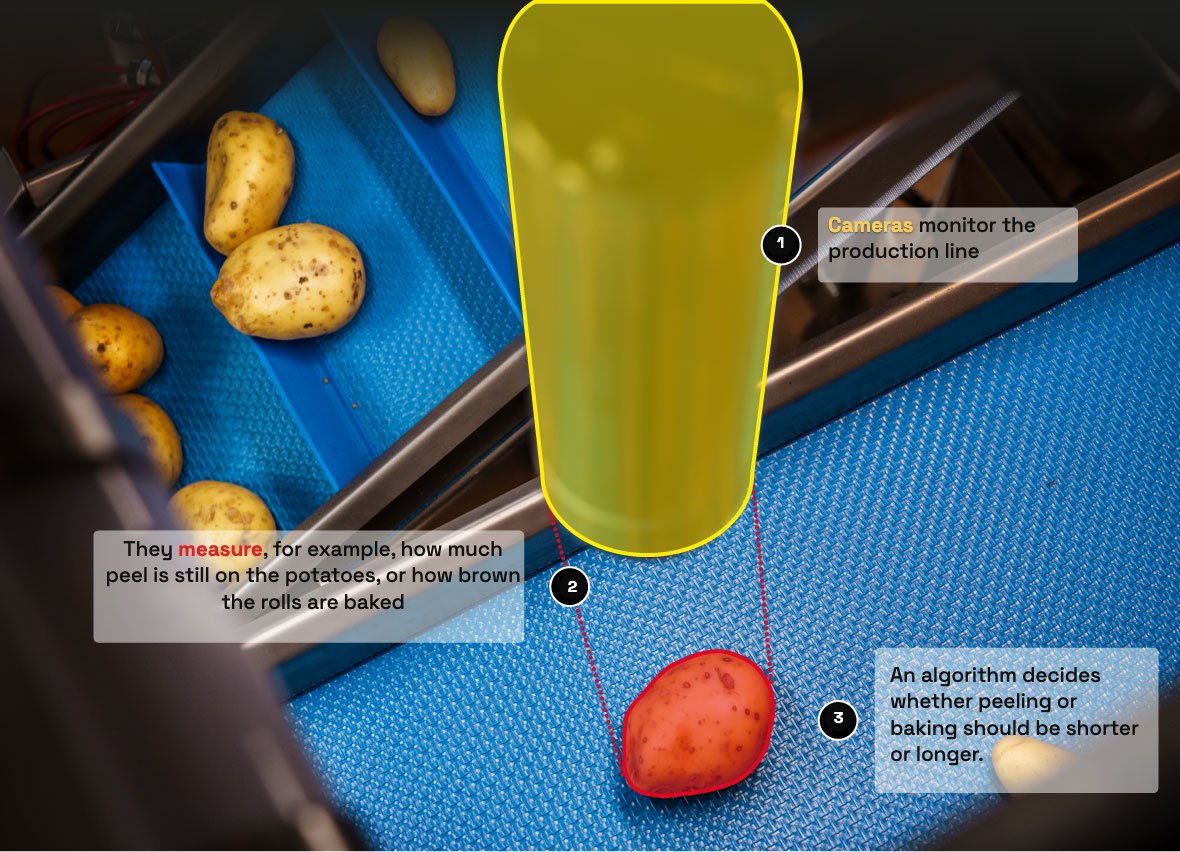
For that to work, the algorithm naturally has to “know” when adjustment is needed. The computer needs to be able to tell the difference between a good potato and a bad one, or between a properly baked cookie and a poorly baked one. That’s an enormous challenge. “Potatoes come in all sorts of shapes and colors, for instance, with more or fewer dents and blemishes,” says Van Dijck. “It would take a lifetime to show the computer every single variation.”
The engineers solve that problem with what’s known as synthetic data. They train the algorithm using virtual potatoes, fries, or bread rolls. “That way we can generate huge amounts of data covering every possible potato or roll you might come across,” Van Dijck explains.
To be usable across different companies, the computer also has to recognize these products under varying conditions. “We have someone on the team who studied special effects at film school,” says Van Dijck. “They simulate hyper-realistic factory environments. The end result is a model that understands the concept of a ‘roll’ or a ‘fry’ and knows what it’s supposed to look like.”
For now, the camera looks at the production line much like a human eye would, but using microwave, UV, or infrared cameras could reveal a lot more information. “You could, for example, measure the moisture or sugar content of dough to fine-tune baking time,” says Van Dijck. “Right now, rolls and cookies get lost because they’re baked a bit too brown or are a few millimeters too big. We want to put a stop to that.”
Autonomous race cars
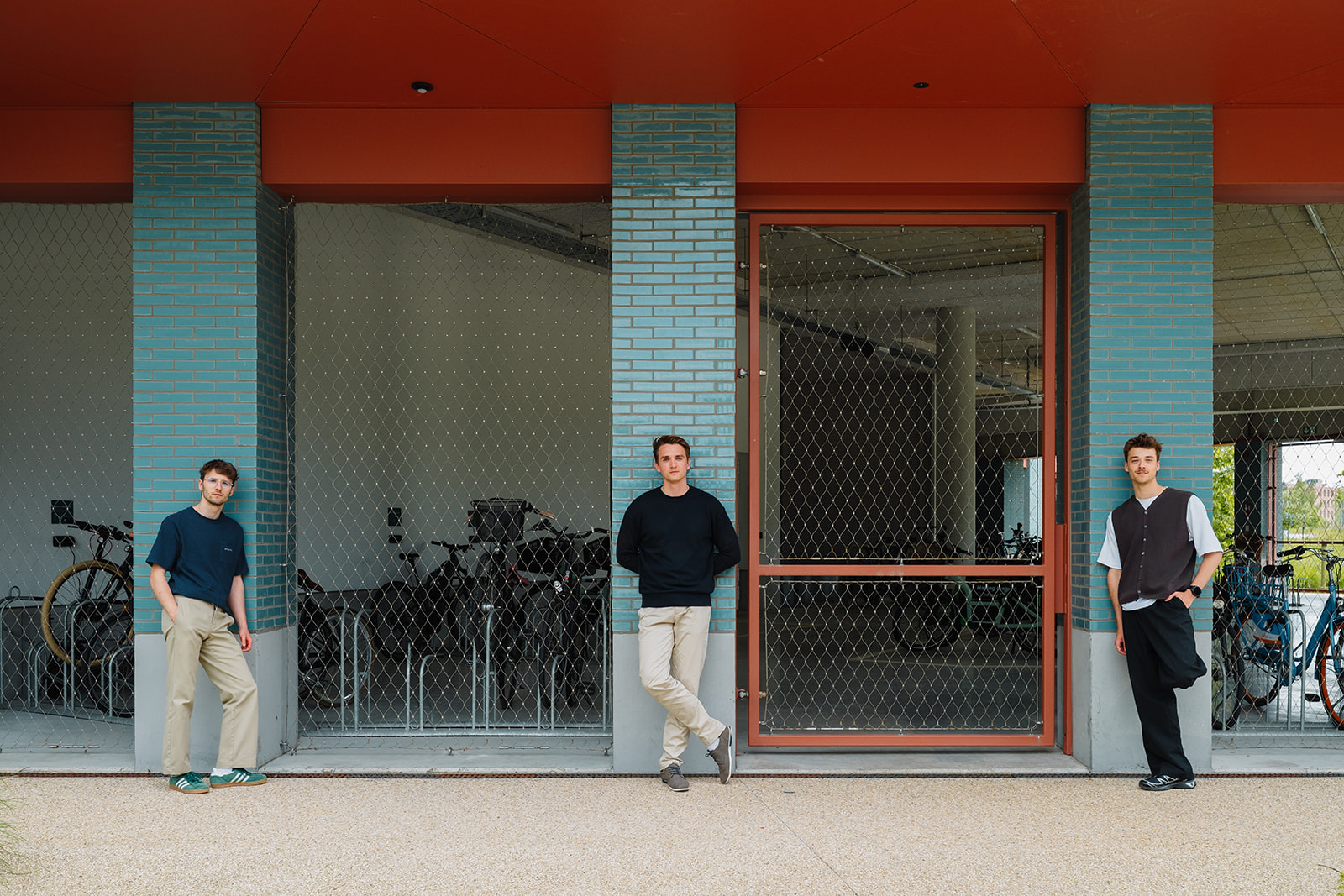
Together with fellow student Jarne Bogaert, De Munck and Van Dijck founded Polysense in 2024. The three civil engineers met in 2020 on the UGent Racing Team, where they worked together on an autonomous electric race car. “We built it completely from scratch, down to the battery,” says De Munck. “A fantastic experience.”
This was back when ChatGPT didn’t exist yet, and it was already quite an achievement if you could keep a self-driving car more or less on the road. That’s when they got their first taste of synthetic data. “To teach the car to stay within the cones, we manually labeled cones on more than 25,000 images as a team,” Van Dijck laughs. “Good fun with a beer in hand, but it took forever. So we started teaching our car the rules in a virtual environment instead.”
The three of them grew increasingly passionate about the rapidly developing possibilities of AI. When it came time to leave the racing team at the end of their student years, they knew they wanted to continue with it, and that they’d prefer to apply the technology to sustainable purposes.
“When I see the tons of food we’re saving, that actually feels more satisfying than working on a race car.”
—Co-founder and CTO
Their search for where they could make a difference took them past dredging company DEME and pharma giant GSK. “Around the time of Tom Waes’s accident, we analyzed footage of cars driving into crash barriers to understand how and why that happens,” says Van Dijck. “Just to give you an idea: we’ve done a bit of everything.”
A project for potato processor Agristo is what brought them home to the food industry. The step from the racetrack — with its slightly higher “boys and their toys” factor — to the food aisle is smaller than you might think at first glance.
“The DNA of our team has stayed the same,” says Van Dijck. “For most members of the racing team, it was never really about the car itself. What we wanted was to solve a problem together with a group of hyper-passionate, smart people. That hasn’t changed today. And when I see the tons of food we’re saving, that actually feels more satisfying than working on a race car.”
A French fry line in Saudi Arabia
Still, it’s hard to get a precise picture of exactly how much loss is being avoided. “Polysense helps us get more fries out of the same amount of potatoes,” says Kristof Wallays, Chief Global Expansion, Innovation and Sustainability at Agristo. “That’s good for our company and for the environment.”
“Polysense helps us get more fries out of the same amount of potatoes. That’s good for our company and for the environment.”
— Kristof Wallays, Agristo
But Wallays can’t say exactly how many tons of waste the potato processor saves this way. The company does process 1.6 million tons of potatoes a year, though — even a few percentage points of waste reduction quickly adds up to thousands of tons.
Roger & Roger, another Polysense client and the company behind Croky chips, would also rather not disclose how much it saves. Lotus Bakeries won’t even reveal exactly what they use the technology for.
It turns out to be easier to get information about Iran’s nuclear program than to peek into the food industry’s pots and pans. “Losses range from a few percent to tens of percent,” De Munck notes. “Our clients don’t like to broadcast those numbers, and for some of them we’re not even allowed to reveal their name. That’s pretty frustrating, because it would make great advertising.”
Even without that publicity, the Ghent start-up is doing quite well, with a rapidly growing client base in Europe, the United States, Canada, and the Middle East. “We even work on a fry line in Saudi Arabia,” De Munck laughs. “The problems are the same everywhere.”
Early this summer, the company raised $10.7 million from investors to roll out the technology further. “We can barely keep up with demand,” says De Munck. “The question now is mainly how we can move ten times faster without our team having to grow at the same rate. Because our ambition is to become the standard in the food factory of the future.”