


Fresh produce variability is inevitable. Losing margin to it isn't.
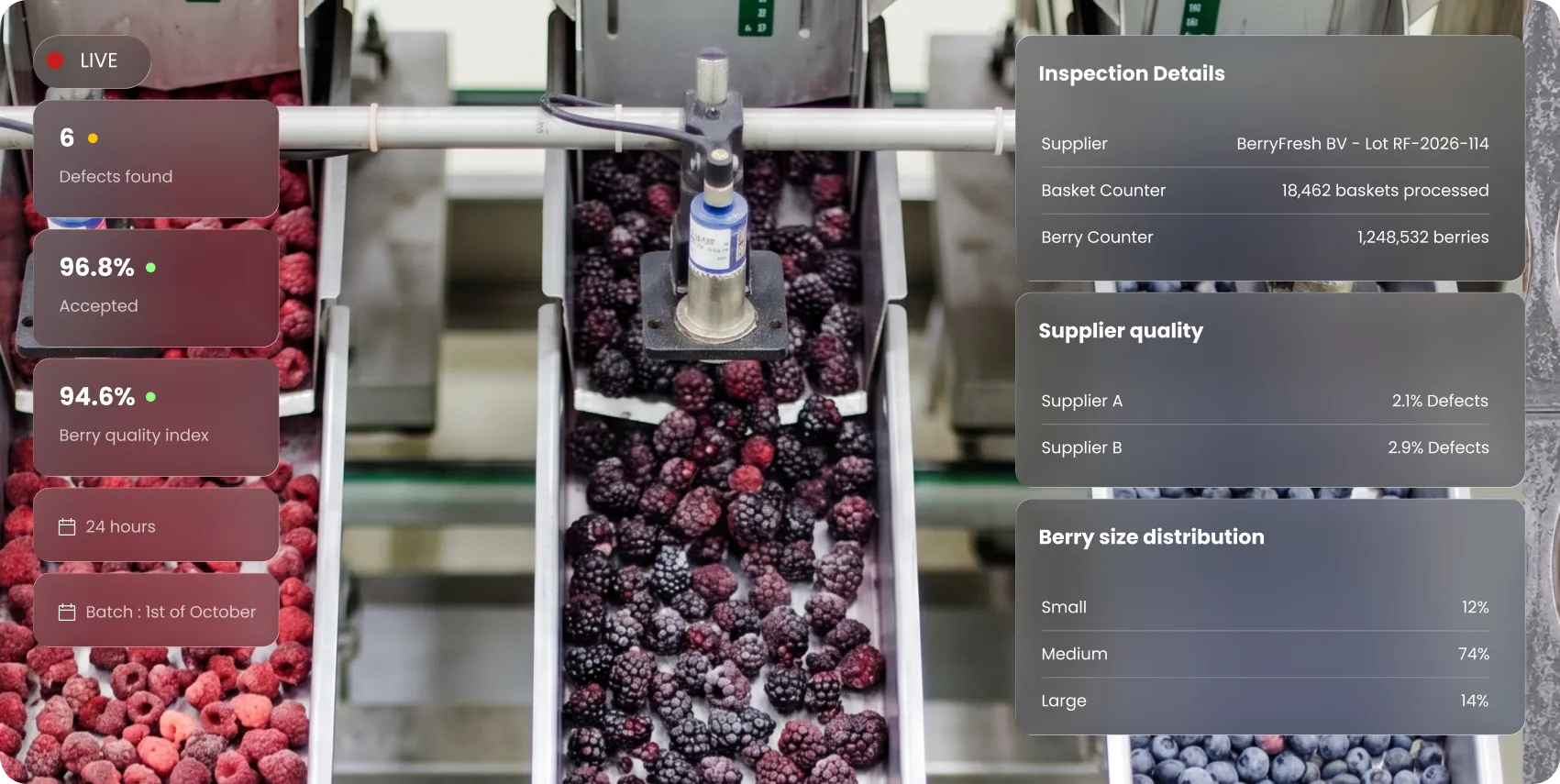
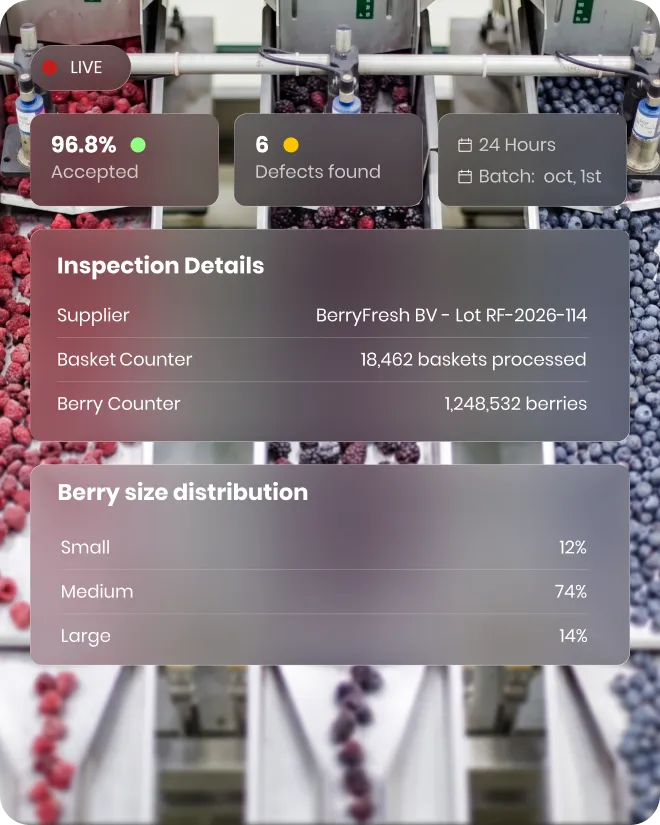


Incoming product inspection
- Detect surface mould, rot and discoloration at intake
- Identify bruising and physical damage on arrival
- Flag out-of-spec supplier batches before they enter the line
- Measure colour deviation and ripeness inline
- Build objective intake data for supplier quality control
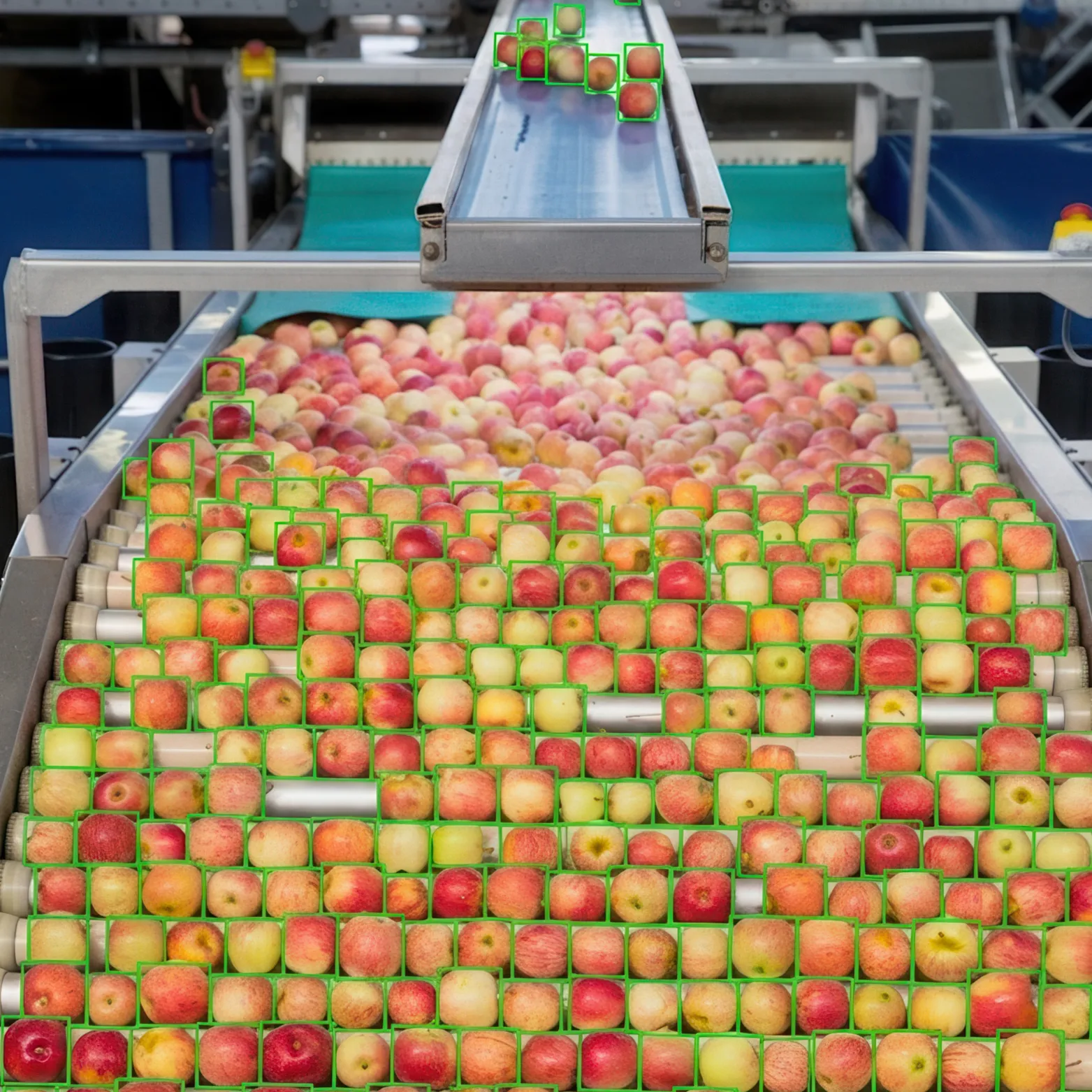
Grading and sorting optimization
- Measure defect rates before and after each sorting stage
- Detect good product lost to poorly calibrated sorter settings
- Feed live data back to sorters to keep rejection parameters accurate
- Track sorting performance across shifts to catch drift early
- Reduce product loss from overly aggressive rejection thresholds
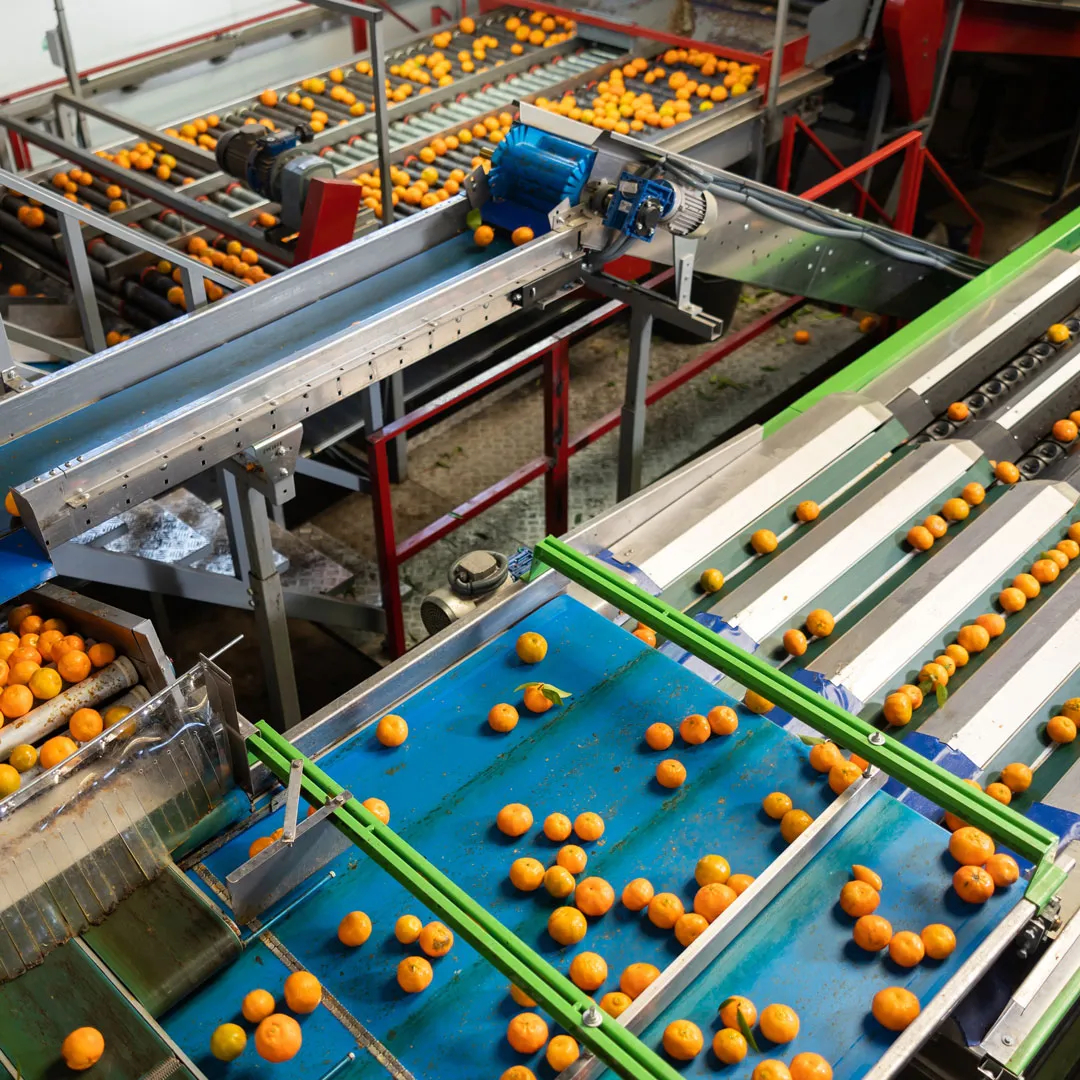
Cutting and peeling optimization
- Measure residual peel and trim loss after every peeling cycle
- Detect over-peeling and adjust settings dynamically
- Monitor cut dimensions and shape consistency across the run
- Catch cutter drift before off-spec product accumulates
- Track yield loss per batch to identify where product is being lost
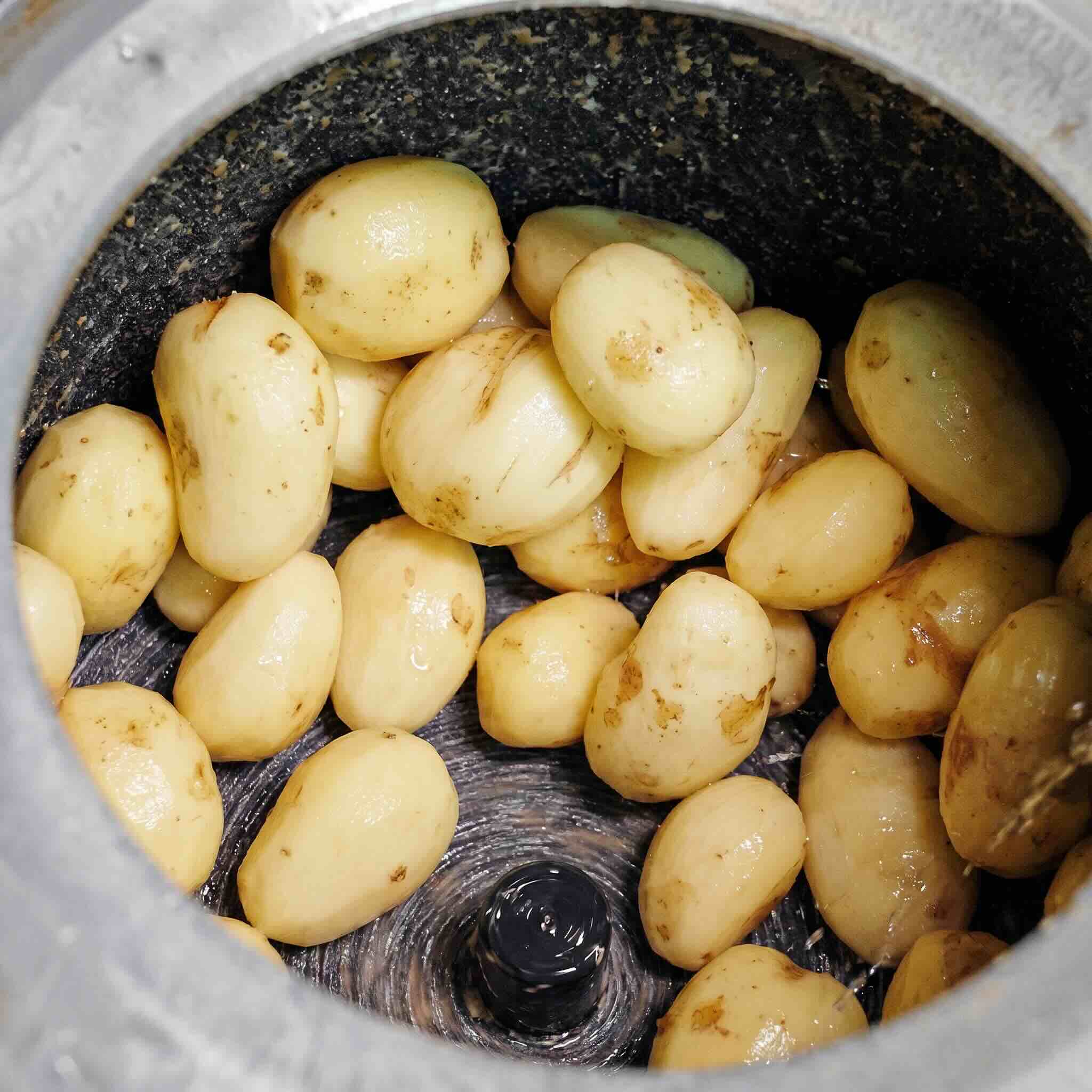
Optical Sorter Optimization
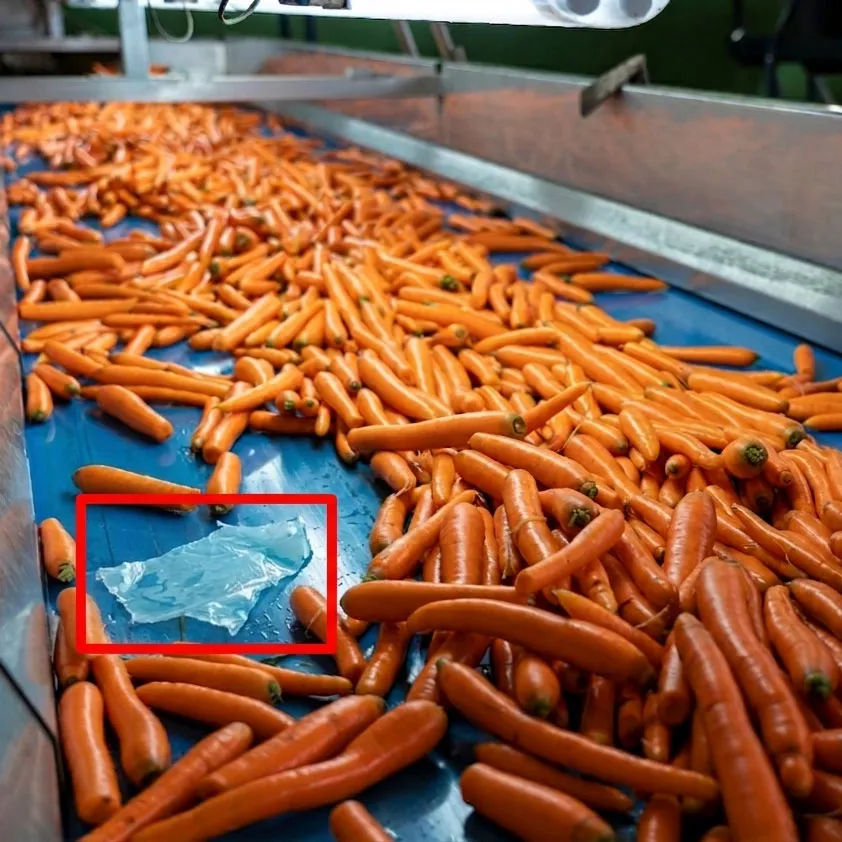
- Detect foreign material across fruit, vegetable and mixed streams
- Stop contaminated product before it reaches dosing or packaging
- Trigger automatic rejection without stopping the line
- Monitor contamination frequency to identify recurring sources
- Log every detection event for full traceability
Defect & Foreign Material Detection
- Verify label placement and print quality on every pack
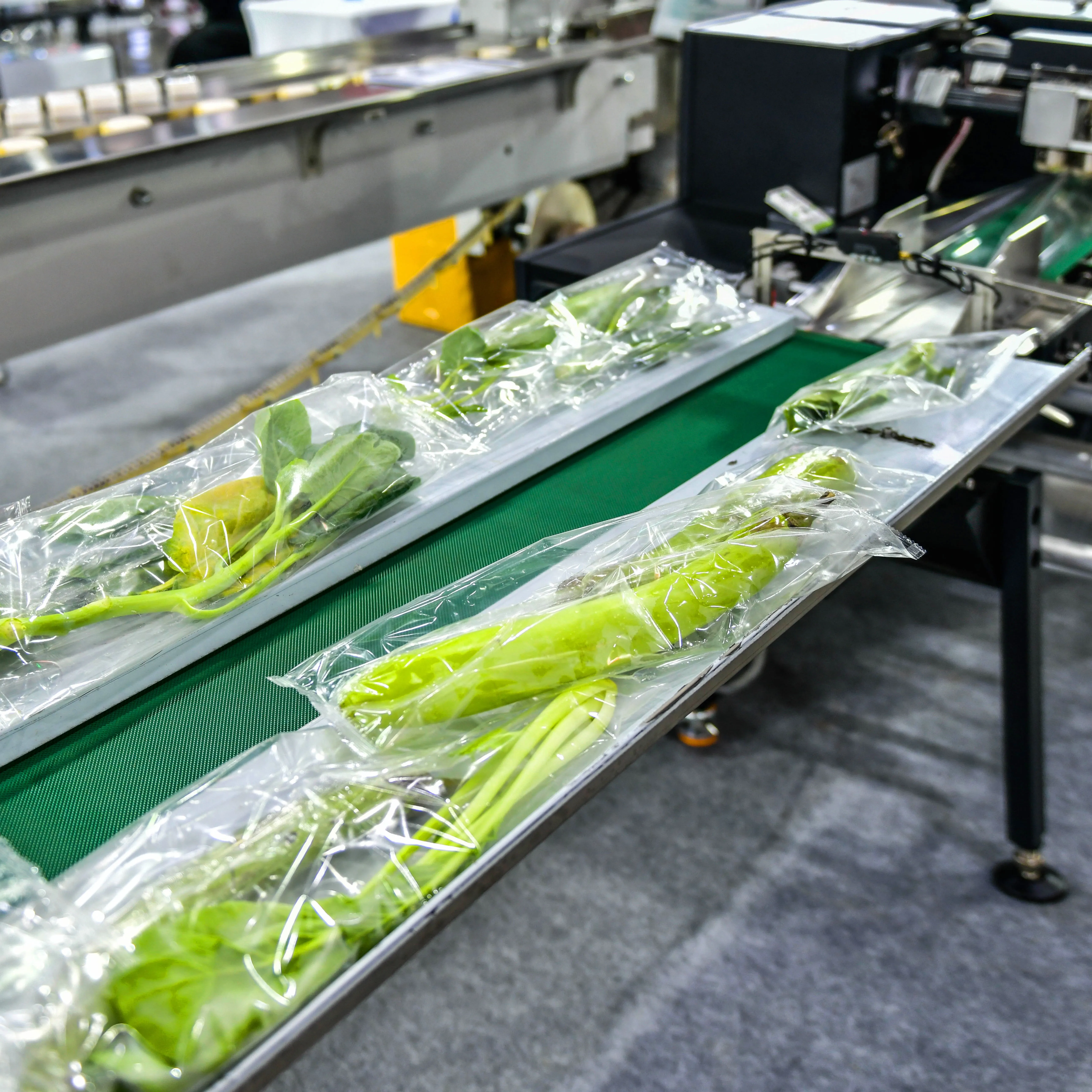
- Check seal integrity across all packaging formats
- Validate date codes against production order data
- Detect incorrect or missing packaging material
- Flag errors in real time before product leaves the facility
Why fresh produce processors choose Polysense

Protect yield and margins
Reduce waste across the line
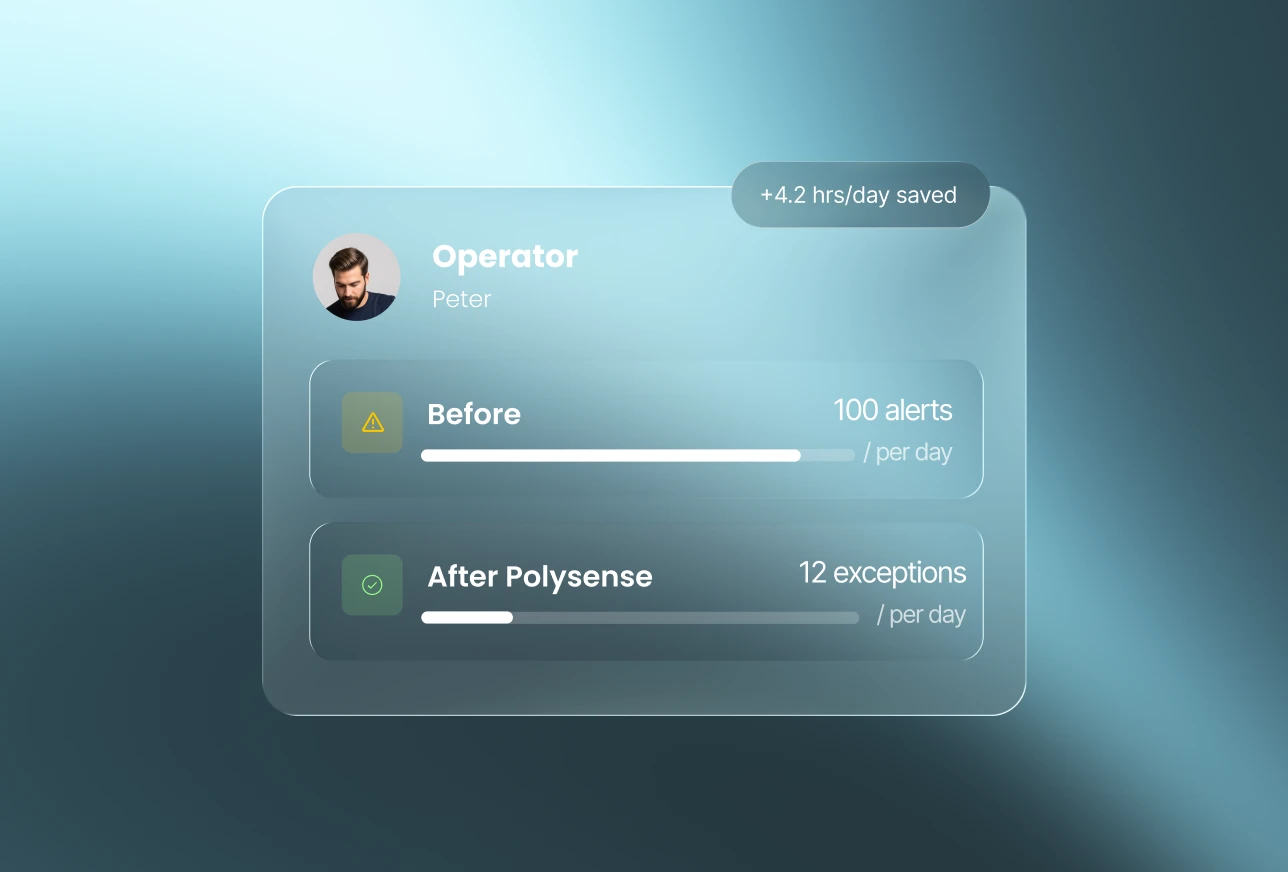
Helping operators deliver consistent results every time
Protect yield and margins
.png)
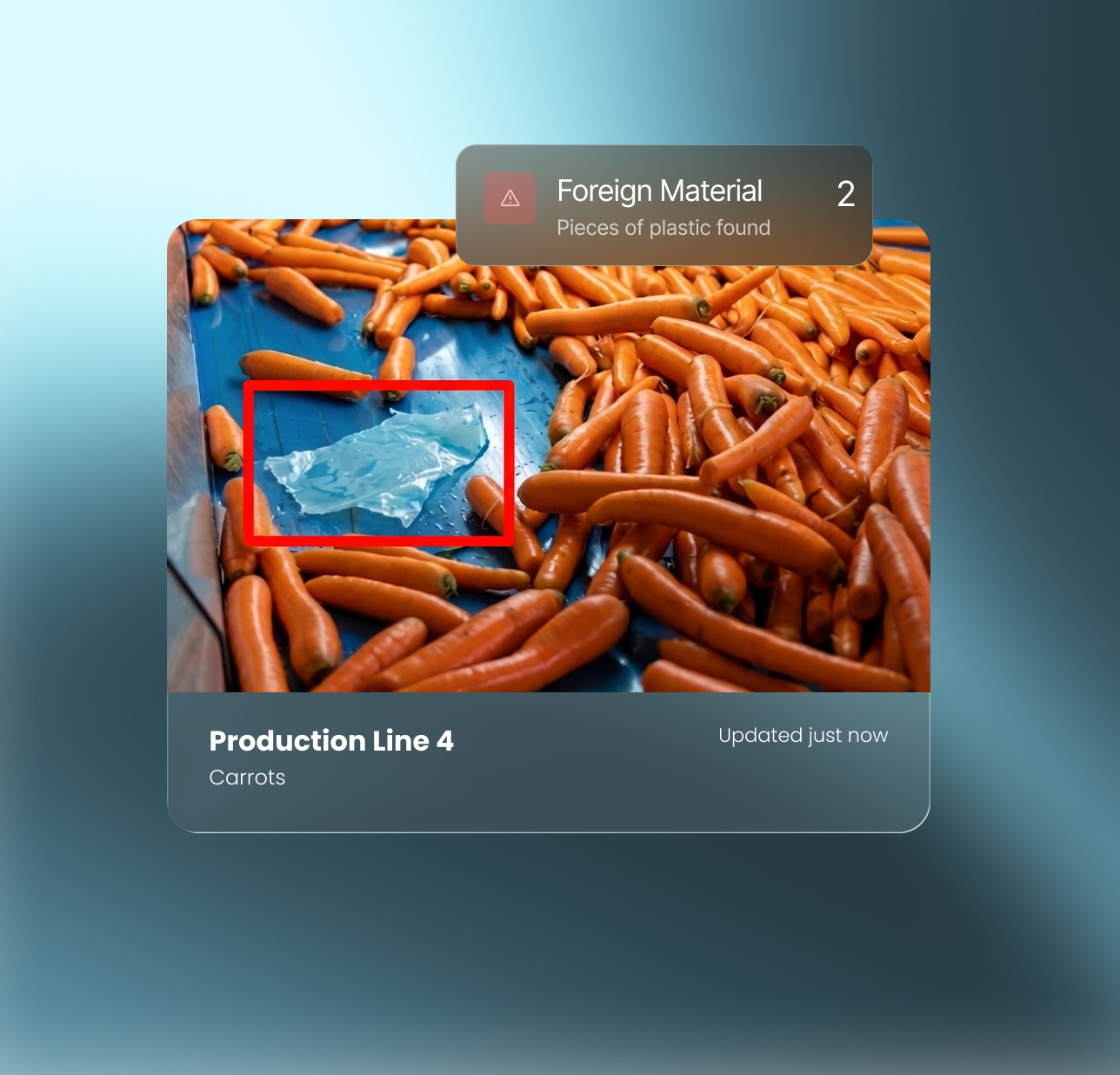
Catch quality problems before they become costly
Consistent output, every shift, with every operator


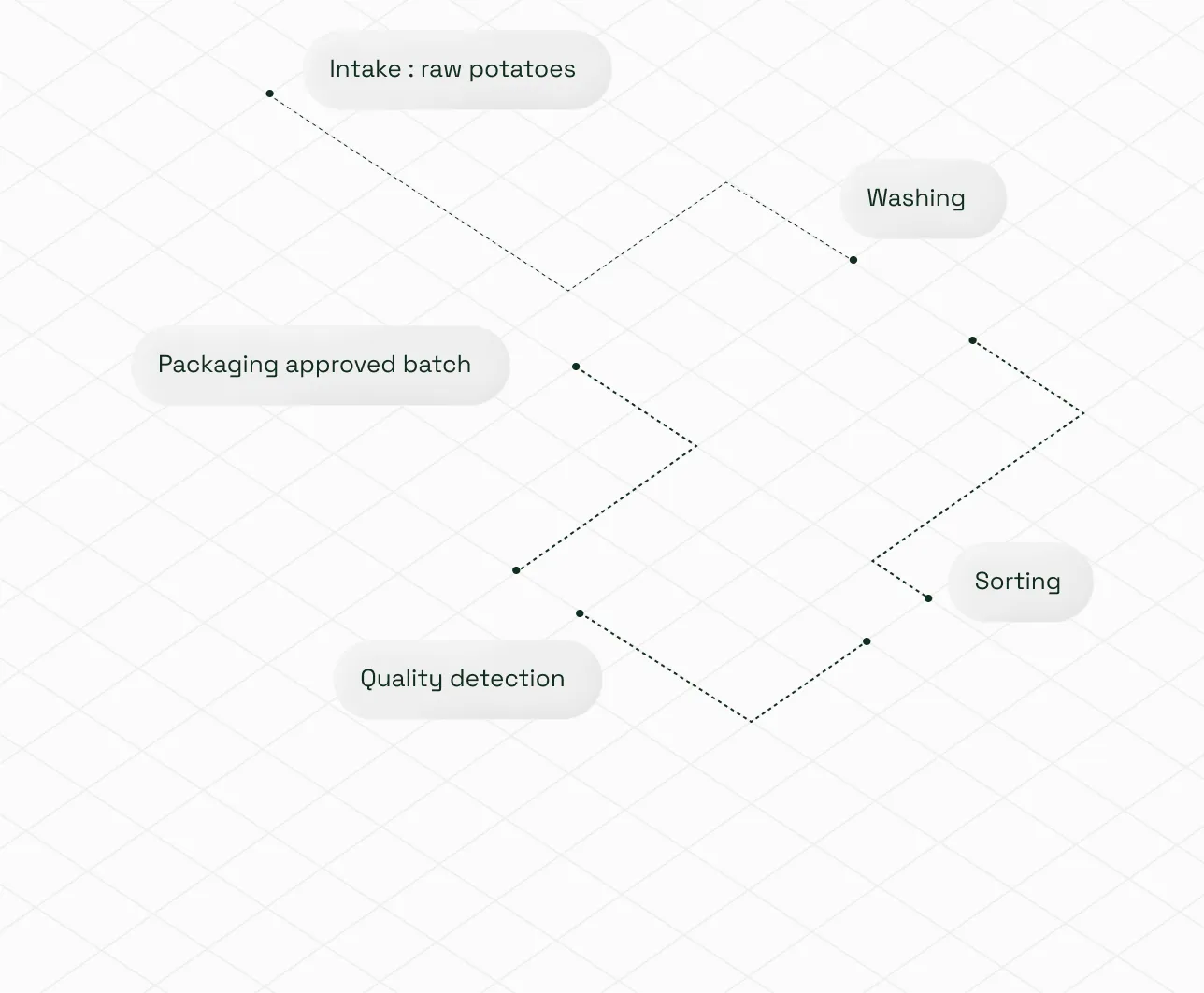
How Polysense improves your production line step by step
Understand your production line
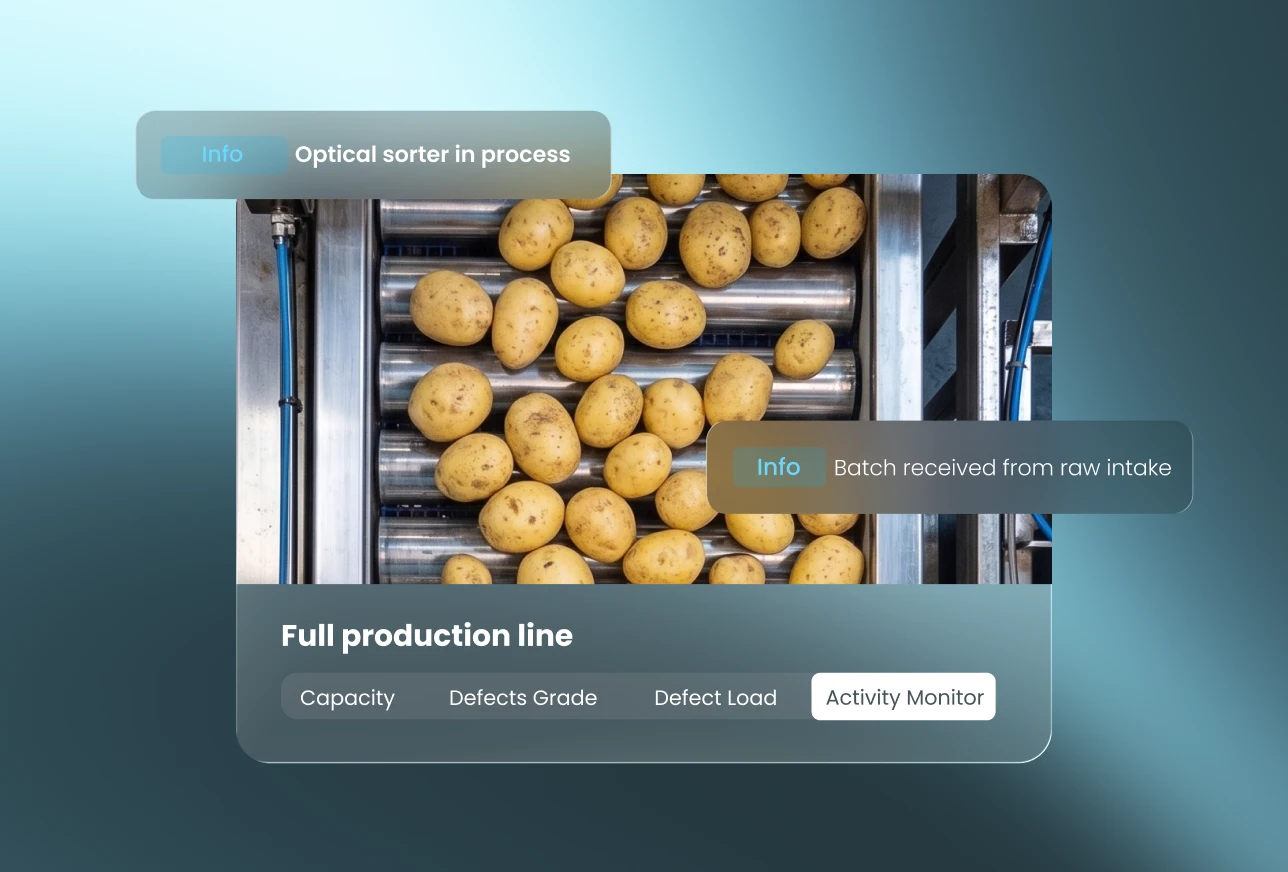
Install and train
Real-time control in your hands
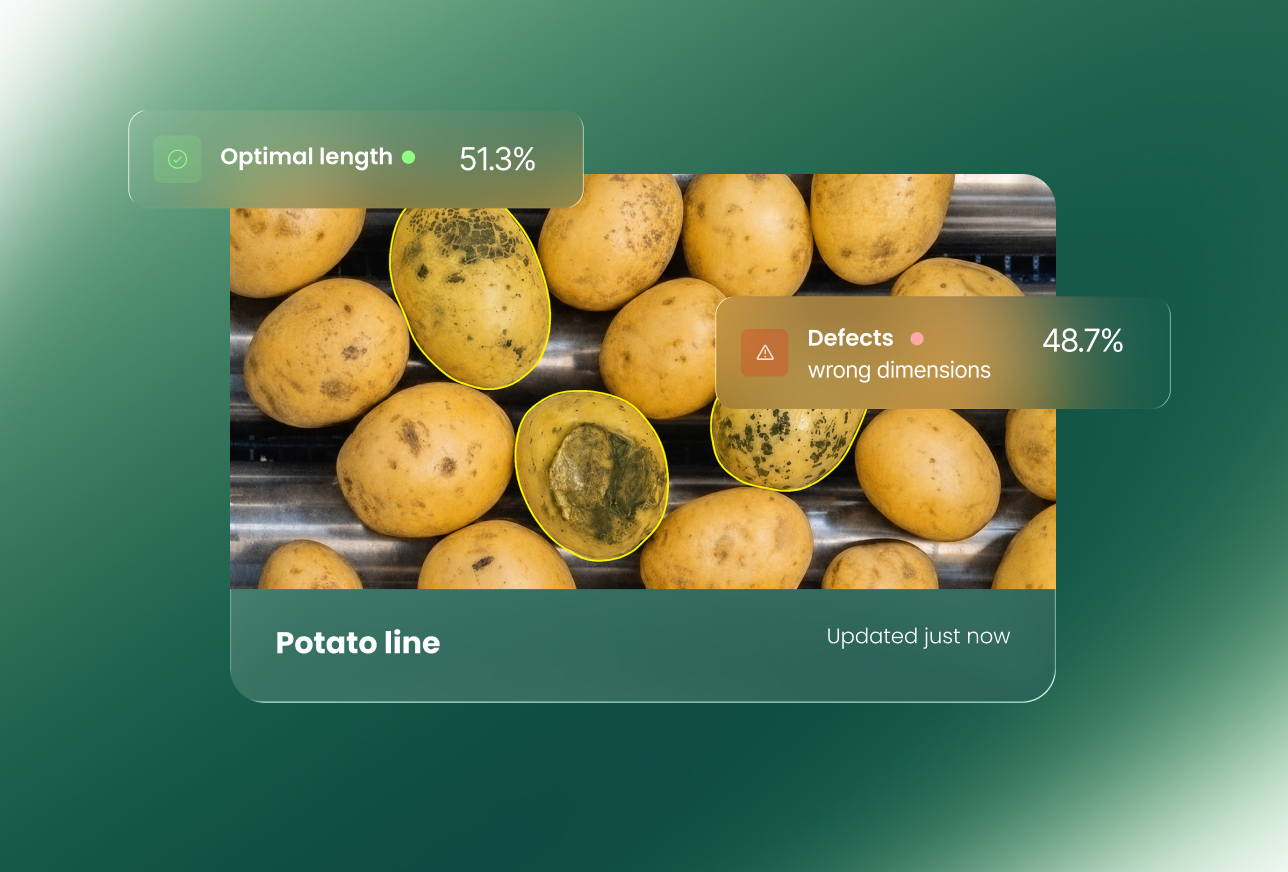
Closed-loop optimization
The outcome?
You might have some questions
That's exactly what it's built for. Fresh produce quality shifts with climate, growing region and supplier. Polysense measures quality continuously, so your line parameters adapt to what's actually coming in rather than staying fixed to last season's settings.
Optical sorters are only as good as the settings behind them. Most are configured once and rarely updated, because there's no live data to drive adjustments. Polysense feeds continuous measurement data back to your sorters, so their parameters stay accurate as raw material quality shifts across seasons and supplier batches.
Polysense integrates with the systems already running on your shop floor, including SCADA, MES and PLC platforms. Measurement results flow directly into the systems your team already uses, including your central dashboards and reporting tools. No parallel infrastructure required.
Yes, and this is one of the highest-impact use cases. When operators set aggressive peeling settings to be safe, they lose good potato that did not need to come off. Polysense measures peel remain in real time and adjusts peeling parameters dynamically, so you peel just enough, consistently, without leaving peel behind or removing more than necessary.
Yes. Polysense is configured to detect and classify specific defect types relevant to your line and your quality standards. Whether you need itemized defect categories or a general defect rate, the system is set up around the parameters that matter for your operation and your customers.
That is exactly what it is built for. Polysense measures quality continuously, so your line parameters adapt dynamically as raw material characteristics shift across seasons, varieties and supplier batches, rather than staying fixed to settings that made sense months ago.
No. Polysense is designed to install on the line you already have. We connect to your existing equipment with minimal hardware changes, including peelers, cutters, sorters and washers. Most lines are up and running within a few weeks.
That's common. Most vision systems are built as generic tools that don't account for the realities of food processing. Polysense is different in two ways: we focus exclusively on food production, and we've built deep, hands-on understanding of how real potato processing lines actually behave. We work directly with potato processors, so the system is designed around yield, variability and production constraints, not lab conditions.