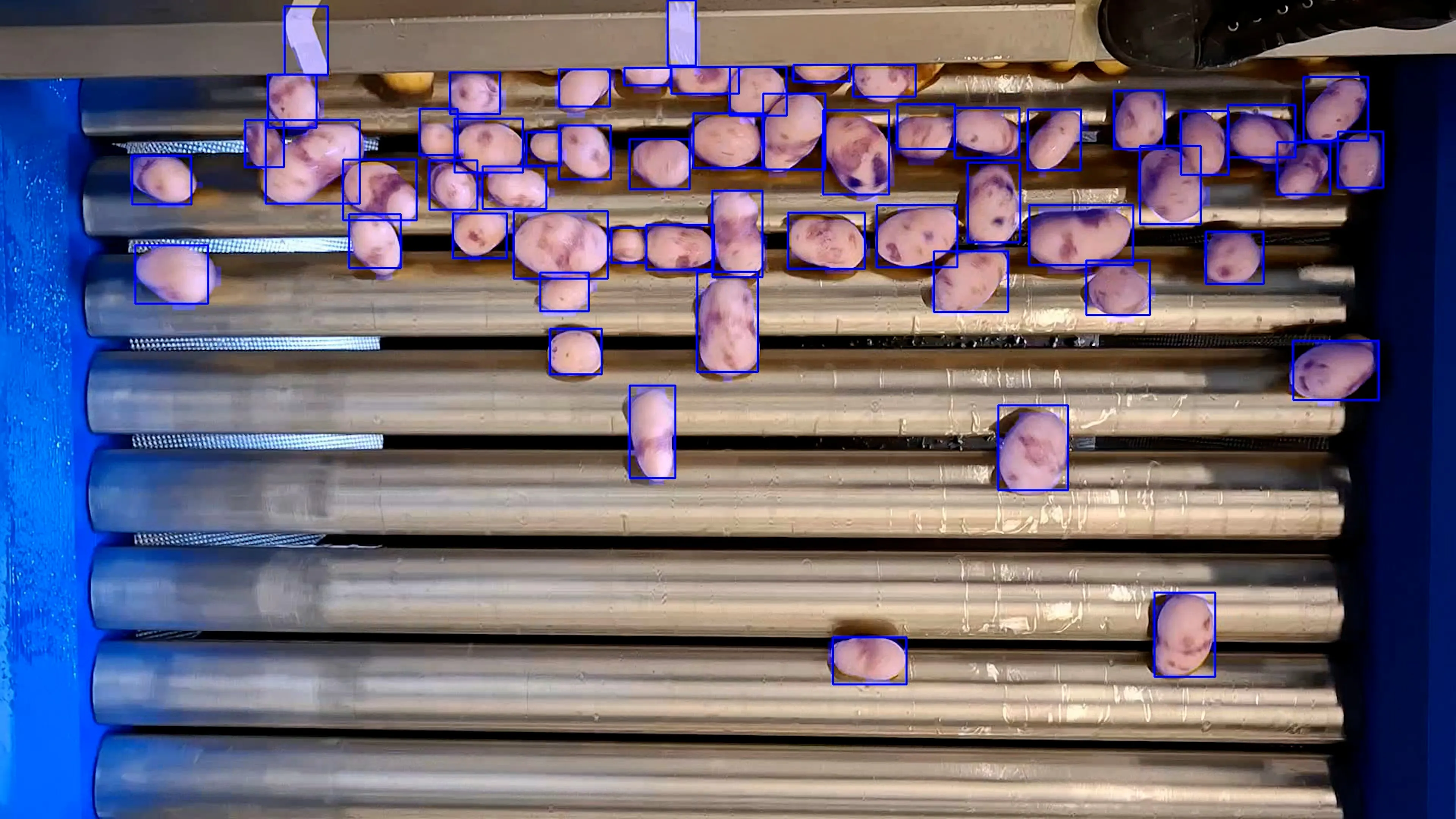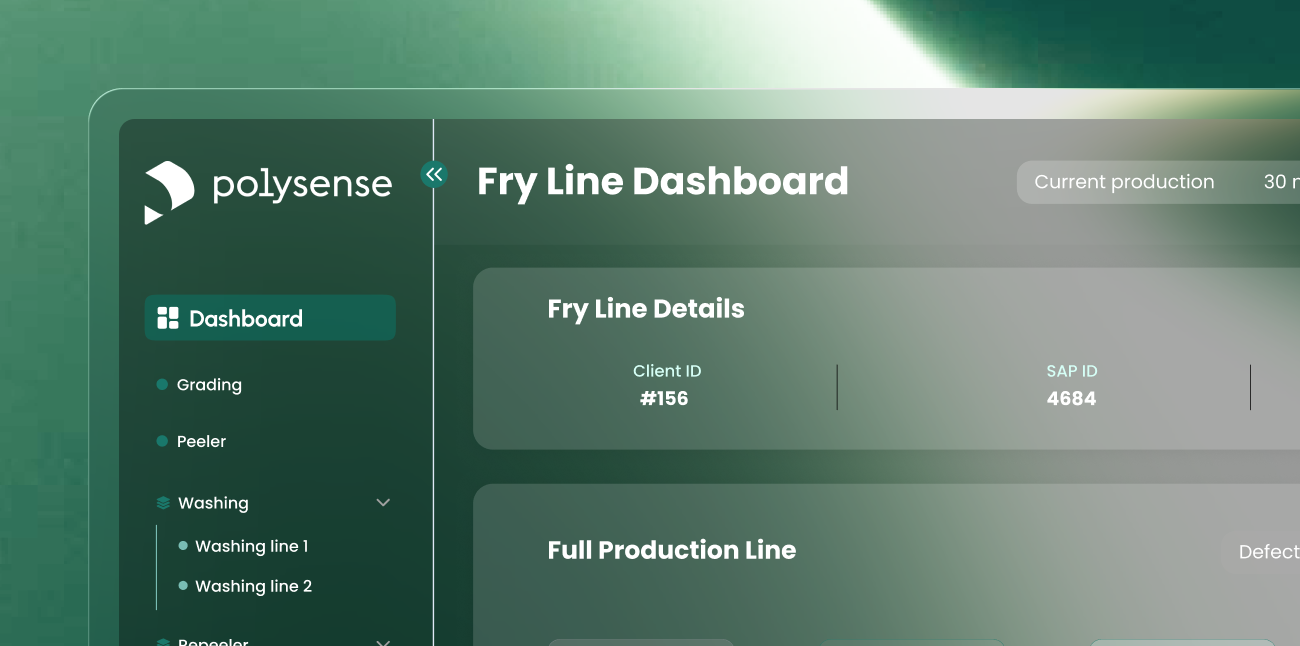



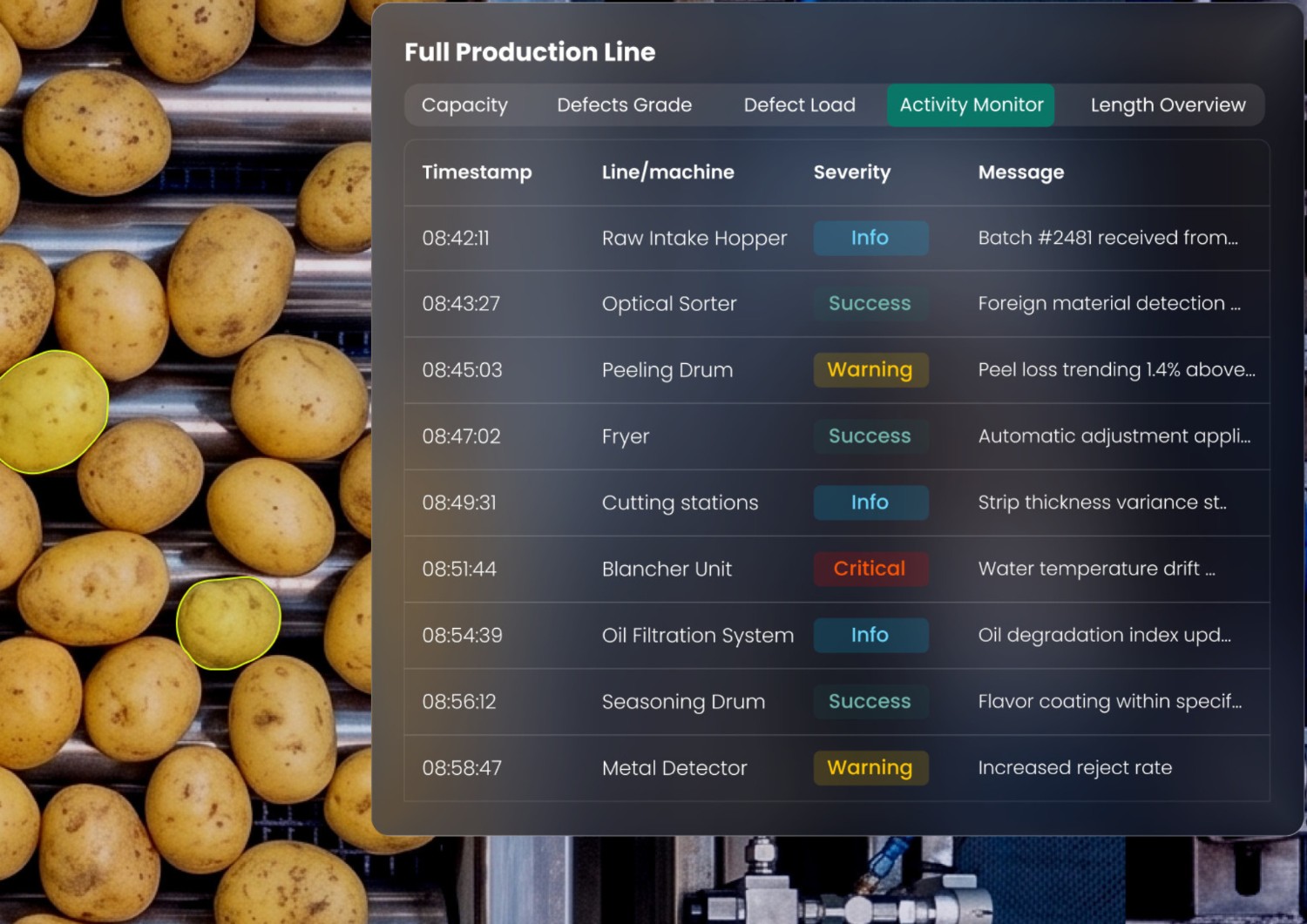


The AI on a modern food line has no face, no voice and no robot arms. It is a camera above a conveyor full of fries, buns or apples, a screen that shows how color and size develop over the shift, and an oven, peeler or sorter that adjusts itself when the raw material changes. Nothing about it looks like the movies. It works more like a very attentive colleague on the night shift. So where does AI really stand in food production, what does it change on the line, and why is food such a tricky place for it?
Most AI today never touches a production line
When people talk about AI, they usually mean chatbots and tools that write text. That is also where most companies use it. In 2025, about one in five EU companies used AI, and the most common uses were analyzing text and generating text, images or sound. AI that acts in the physical world was used by just 1.39%, according to Eurostat.
Using AI also doesn't mean getting results from it. McKinsey found that 88% of organizations use AI somewhere in the business, but only about one-third have started to scale it. On a production line, AI looks very different, and so does the test of whether it works: less waste and steadier quality, shift after shift.
What AI on a production line actually is
In a factory, AI is usually not a robot and not a chatbot. It is software that has learned to recognize patterns from examples. Show it thousands of images of fries, croissants or apples, and it learns what normal product looks like, including all its natural variation in size, shape and color.
That is the big difference with older vision systems, which work with fixed rules: reject anything darker than this shade, or shorter than this length. Fixed rules are easy to set up but struggle with natural products, where "normal" is a range, not a single value. A trained model can handle that range, and it can learn again when the product or the raw material changes.
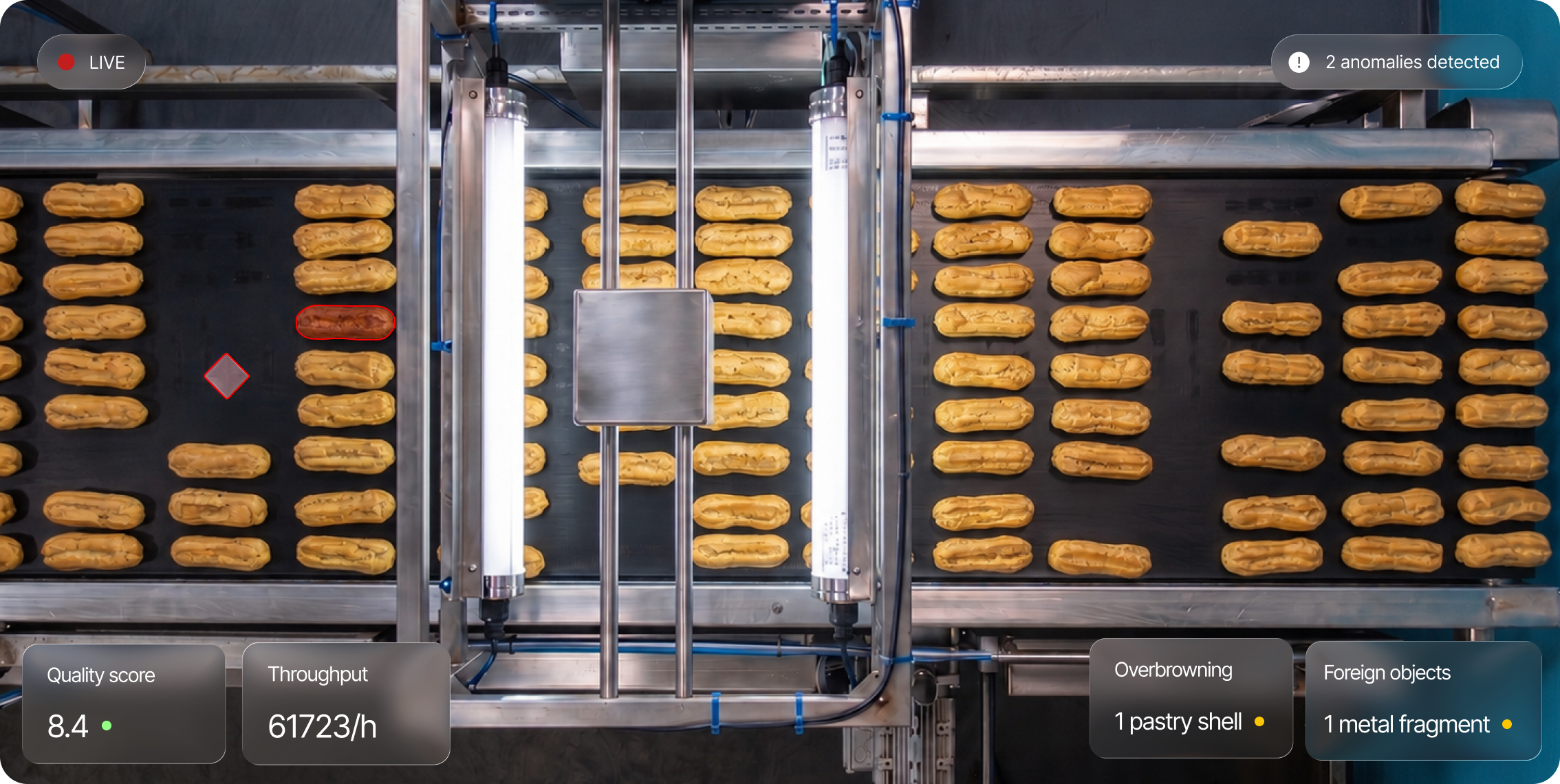
What it changes on the line
On a food line, AI mostly helps with two things: seeing and acting. It can look at far more product than a person ever could, and turn what it sees into a clear picture of quality across batches and shifts. Instead of judging a batch by eye, teams see how quality develops over time and catch problems earlier.
The more advanced systems go one step further and use that information to steer the process itself, a bit like a thermostat that keeps a room at the right temperature without anyone touching the dial. The result is a line that responds to changing raw material instead of running on fixed settings, and operators who spend less time on constant small corrections.
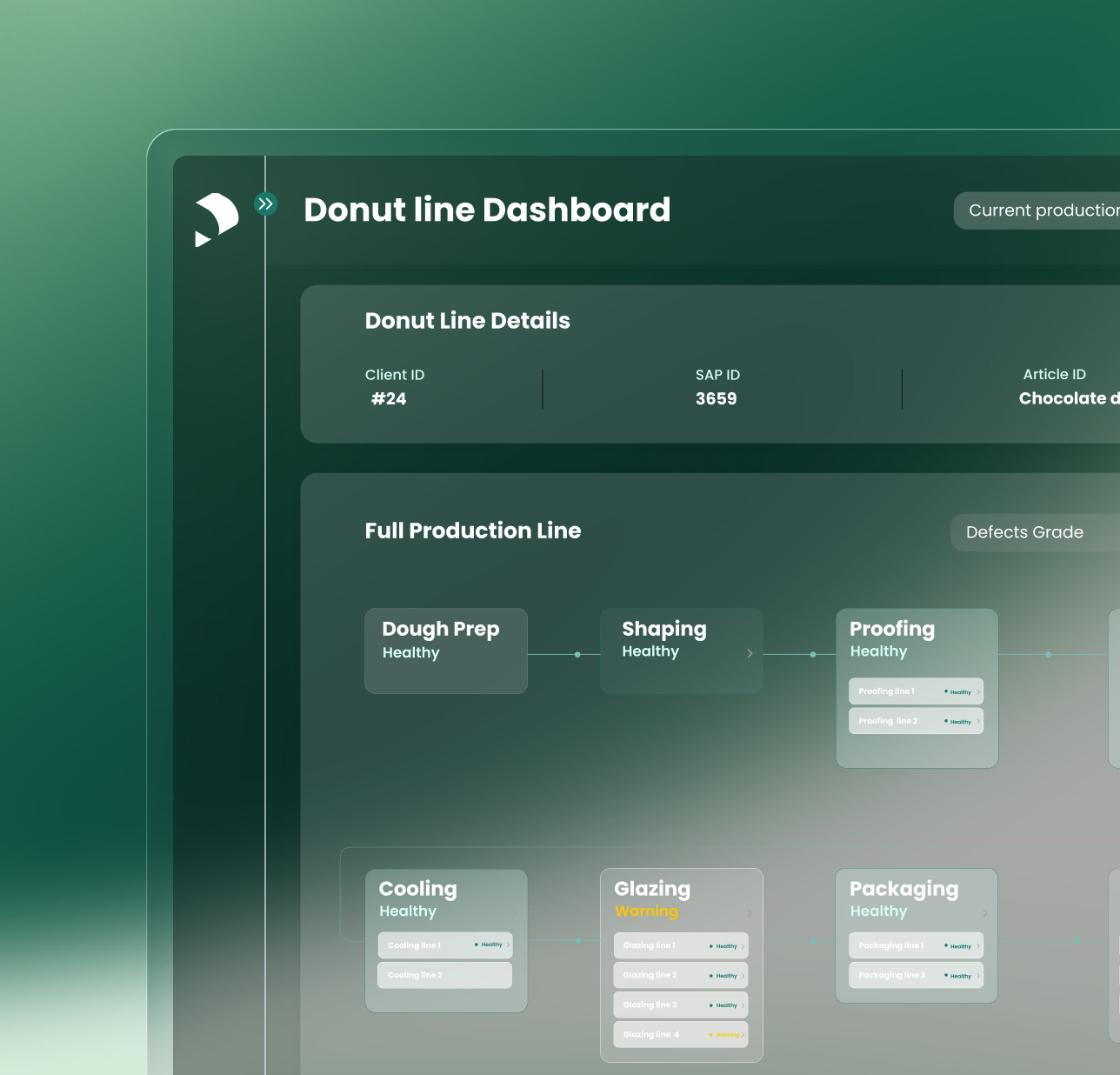
Why food is a tricky place for AI
Food is not a car part. No two potatoes, loaves or apples are the same. Raw material changes with the season and the supplier, and real defects are rare, so there are few examples to learn from. Foreign material is even harder when it looks like the product itself, as we explained in our post on foreign material detection in bakery.
The factory adds its own challenges: steam, dust, water and changing light, every shift. Plenty of systems work in a lab. Fewer keep working on a real line. That is why a few simple questions tell you a lot about any AI system for food production:
- Does it inspect every product at full line speed, or a sample?
- Was it trained on your product and your raw material?
- Does it connect to your existing control systems, or live on a separate screen?
- Does it change anything on the line, or only report?
How Polysense brings AI to the factory floor
Most lines still judge quality from samples taken "typically once an hour or less," as we describe on our Polysense Qualify page. We built Polysense for food production only, around that same idea of seeing and acting.
Polysense Qualify uses inline cameras and AI to inspect 100% of production output and turn visual variation into objective quality data. Polysense AutoControl uses that data to adjust process parameters such as peeling, cutting or sorting in real time. Polysense Intelligence connects both, so you can map and optimize the whole line.
The AI on a real food line doesn't look like the movies. It looks like a camera, a model and a control loop that keep quality steady on every shift. Less waste. More profit.