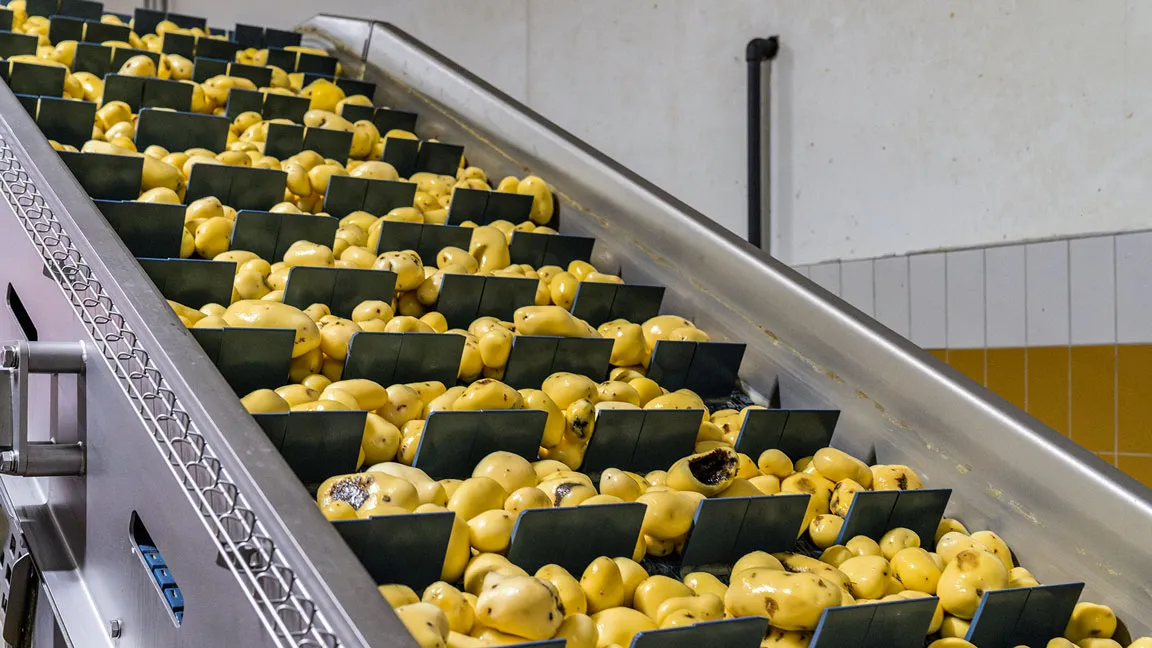





Have you ever noticed a small patch of peel left on a “peeled” potato from the store? In industrial food production, that tiny leftover skin, called peel rest, is a major concern.
Processing thousands of potatoes every hour makes manual inspection impossible. To avoid under-peeled potatoes, factories often overpeel, wasting perfectly good produce. Computer vision provides a solution by allowing machines to detect peel rest and optimize peeling in real time. This results in higher quality potatoes, less waste, and more profit.
1. Why peel rest matters
Peel rest affects more than appearance. Inconsistent peeling can disrupt production and force batches to be discarded.
Key risks of peel rest
- Quality and appearance issues: Peel fragments burn faster than potato flesh, causing off-flavors or dark spots. Leftover peel can reduce the perceived quality of fries, chips, or peeled cubes.
- Hygiene and contamination risks: Residual peel may harbor dirt, bacteria, or pesticides that were not removed during washing.
- Equipment impact: Peel fragments can clog fryers, slicers, or blenders, increasing maintenance needs.
Overpeeling also has a cost. Striking the right balance between under- and overpeeling is difficult, which often leads factories to remove more potato than necessary.
Industry scale context:
- Global potato production in 2023: 383 million tonnes
- U.S. production: ~20 million tonnes, with 65% processed and peeled
- Traditional manual inspection samples only a small portion of potatoes. Entire batches can be discarded if the sample fails, resulting in massive food waste.
For more industry insight, see PMC Foods Article
2. Teaching machines to spot peel
How do you teach a machine to identify tiny leftover bits of potato skin?
Eyes
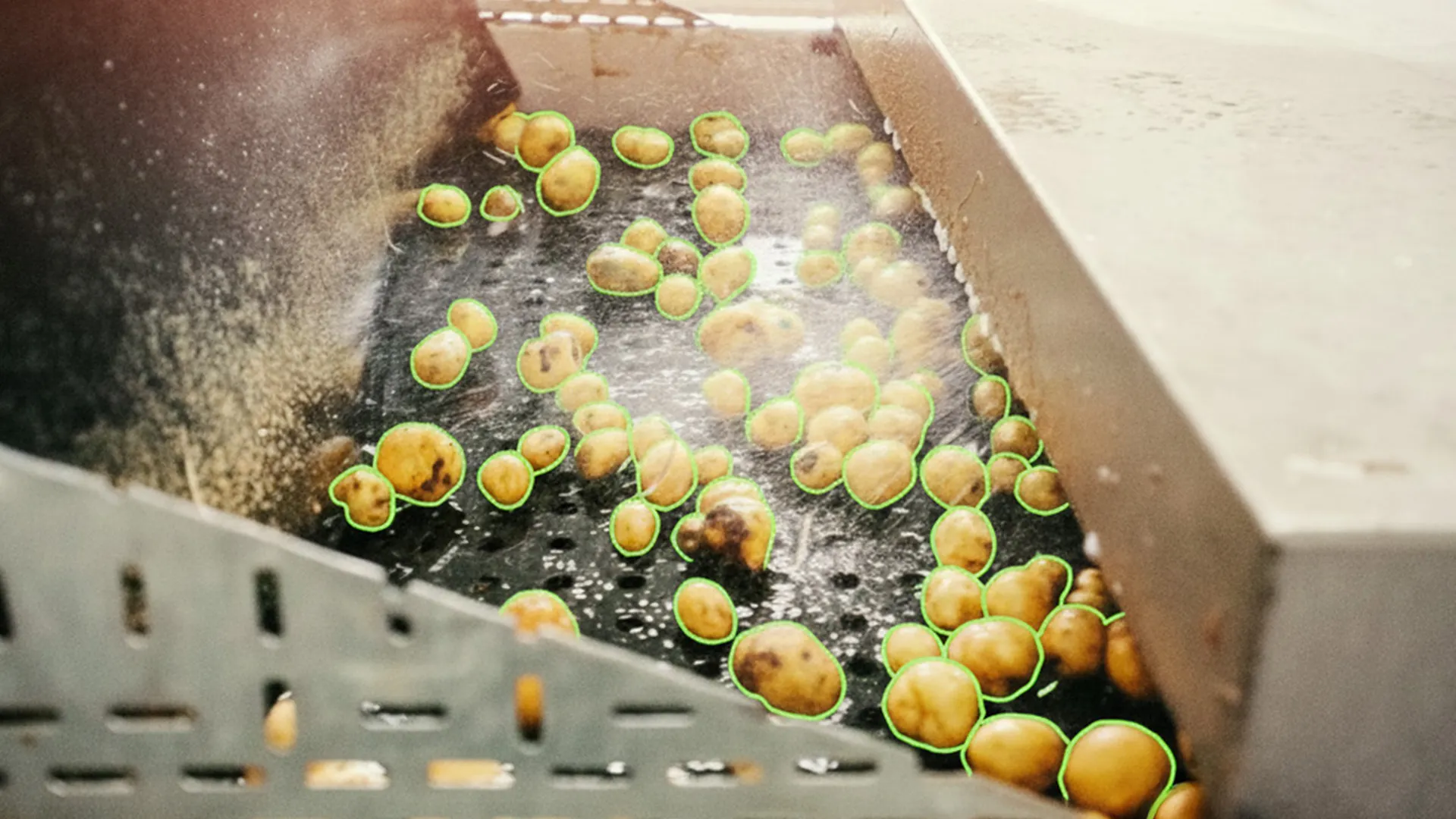
High-resolution cameras are installed at strategic points along the production line to monitor every potato continuously.
Brain
Computer vision algorithms analyze the images to detect peel rest and assign a percentage to each potato. The algorithms have been trained on a diverse dataset of peel variations to ensure accurate detection.
- Smaller models: Faster processing but slightly less accurate
- Larger models: More thorough detection but slightly slower
The machine gains the vision and judgment of a human inspector, but at industrial speed and scale.
3. Closing the loop: from detection to action
Detection is only half the story. The real value comes from dynamic process adjustment.
- If too much peel remains, the system signals the peeler to work harder.
- If overpeeling occurs, peeling becomes gentler.
- Parameters like pressure, duration, and intensity are automatically optimized, considering which adjustments achieve the best result while minimizing wear on the machine..
The system handles variations in potato size, shape, and peel thickness based on its configured settings, ensuring precise and consistent outcomes without assuming autonomous learning in the field.
4. Benefits of computer vision in potato peeling
Adding computer vision may not seem revolutionary, but its impact is measurable:
- Efficiency gains: At a Polysense customer site, fixed peeling time was reduced by 43% after implementing Polysense Qualify for peel analysis and Polysense AutoControl for process optimization.
- Waste reduction: Dynamic adjustments save significant quantities of good produce.
- Predictive maintenance: If a peeler is operating at maximum settings and still fails to deliver product within specification, maintenance may be required.
- Operational confidence: Replaces manual, inconsistent inspections with a reliable, automated system.
- Sustainability: Reduces energy and resource use while maintaining product quality.
- Extended quality insights: Once a camera system is in place, additional defects such as brown or green spots can also be detected, providing full visibility into product quality.
This technology allows food processing plants to maximize yield, reduce waste, and maintain consistent quality, giving operators peace of mind and a competitive edge.